
Sectors & industries
Every degree counts.
Thermal control for processes where product quality depends on every degree.
Processing, preservation and cold chain
Processing plants for fish, seafood and food where the cold chain is critical. APINA designs freezing and preservation rooms and tunnels based on natural refrigerants (NH₃) and, where necessary, low-GWP freons compliant with the European F-Gas regulation.
Specialists in retrofits and refrigerant changes: HFC → NH₃ / CO₂ / new-generation freon migration. And in using the waste heat of industrial processes to produce cooling by absorption.
Every food demands its own cold
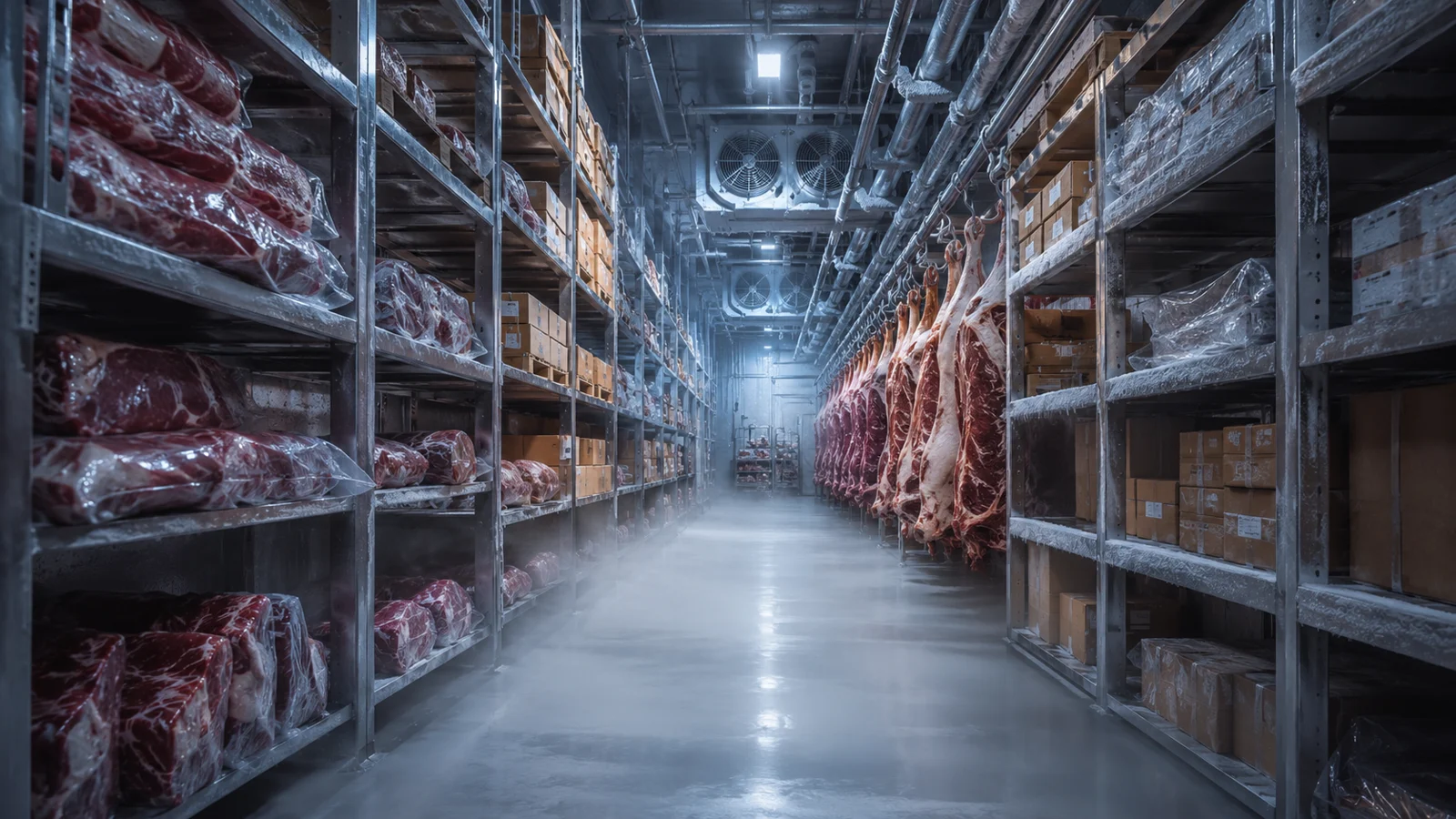
Each product needs a different cold. Meat requires carcass chilling at the slaughterhouse, refrigerated cutting and, for hams and cured meats, drying rooms with controlled temperature and humidity; dairy, immediate milk cooling, processing rooms and cheese-ripening chambers; fish and seafood, quick freezing (IQF) and ultra-freezing tunnels; fruit and vegetables, swift pre-cooling after harvest.
They all share two demands: an uninterrupted cold chain —from positive preservation (0 / +4 °C) to deep freezing (−18 / −40 °C)— and hygiene and traceability worthy of the EU, Japan or US markets. APINA designs each plant to fit the product and its process, not the other way round.
Capabilities
Rooms and tunnels
Quick freezing (IQF), preservation at −18/−25 °C and ultra-freezing tunnels at −60/−70 °C. Tailored to the product.
F-Gas / Kyoto
Full compliance with the European F-Gas regulation and the Kyoto protocols. Transition plan to natural or low-GWP refrigerants.
BV traceability
Monitoring with Bureau Veritas approved recorders and access via web/VPN. Essential for EU, Japan and US markets.
Solutions by sub-sector
Meat
Carcass chilling at the slaughterhouse, refrigerated cutting, freezing tunnels and ham and cured-meat drying rooms with controlled humidity.
Dairy
Immediate milk cooling, processing and pasteurisation rooms, and cheese-ripening chambers at stable temperature.
Fish and seafood
Quick freezing (IQF), ultra-freezing tunnels at −60/−70 °C and preservation, both on board and onshore.
Fruit & vegetables
Fast pre-cooling after harvest and preservation rooms that extend the product's shelf life.
Cold logistics
Automated cold platforms and warehouses, positive and negative, with management and traceability.
Ice plants
Flake or liquid ice production for preservation and processing, in plant and on board.
Cold is half the bill
In a food plant, refrigeration accounts for around 35 % of electricity consumption —and up to 54 % in a cold store. That is why design matters so much: low-charge ammonia for its very high efficiency, recovery of the process's own waste heat (cogeneration, steam, ovens) to produce cooling by absorption with almost zero electricity, and natural refrigerants that are F-Gas-proof.
It is the engineering APINA has brought to sector references such as Campofrío, COVAP, Coren or C.A. Guissona, where cold is a critical —and costly— part of the process, not an auxiliary service.
Applicable APINA technologies
NH₃ absorption
airCub
BV recorders
Secondary refrigeration
Chlorides, glycols
More in sectors & industries